“For businesses managing campaigns across multiple markets and platforms, keeping up with demand can be tricky. Marketing teams may also lack the time and resources to produce enough creative, execute ongoing optimisations and analyse campaign performance. Without clear data or an understanding of why certain ads work better than others , businesses can be left making decisions in the dark. AI in digital marketing offers a way to speed up production, explore different creative approaches and improve efficiency.
But are marketers actually producing better advertising, or simply producing more of it?
Without clear direction, quality control and understanding of the audience, businesses risk flooding digital channels with advertising that feels less authentic and struggles to make an impact.
Why are marketers turning to AI?
Campaigns need to run across multiple platforms, reach different audiences and respond to changing consumer behaviour. Meeting these demands can be time consuming and expensive.
AI in marketing offers a way to ease this pressure. Tools such as Canva AI, Adobe Firefly and ChatGPT features allow marketers to brainstorm campaign ideas, create visuals, and generate advertising copy.
Adoption is accelerating. According to ISBA’s September 2025 Generative AI survey, 41% of UK advertisers had at least one live GenAI case study in July 2025, compared with just 9% in April 2024. 62% identified efficiency, including saving time and money as the primary reason for their AI strategy.
How is AI changing advertising production?
AI in creative production is changing how marketers develop advertising, from initial brainstorming to finished campaigns.
For copywriters, generative AI is being used to produce headlines, calls to action, social media captions and product descriptions. Image generation tools are also being used to create visual concepts and backgrounds, while AI powered video platforms can assist with content production reducing the need for traditional filming and editing processes.
AI ad creative also allows marketers to explore creative variations. Rather than producing a single advert, marketers can generate multiple versions featuring different imagery, formats and messaging. These variations can then be tested to understand how different audiences respond to them..
Research from IAB Europe’s 2025 Impact of AI on Digital Advertising report found that 85% of surveyed companies were already using AI based tools for marketing with content generation and targeting being among the leading applications.
However, the growing use of AI generated content is also raising concerns about authenticity and quality. LinkedIn has introduced a “Seems like AI slop” feedback option allowing users to flag posts and comments they consider to be overly reliant on AI.
What’s working well?
AI can help marketers generate concepts, explore alternative messaging and produce creative variations more efficiently freeing up time for strategic planning.
However, AI is most effective when using technology to support human creativity, helping marketers work more efficiently without losing the thinking and expertise behind a successful advert.
More ads don’t necessarily mean better ads.
When producing advertising becomes quicker and easier there is a temptation to prioritise quantity. If AI can generate dozens of advertising variations in minutes then why stop?
The problem is that more creativity doesn’t automatically mean more effective creativity.
Tom from Automated Creative believes marketers are increasingly confusing production efficiency with creative effectiveness.
“AI is making marketers confuse production efficiency with creative effectiveness. Ads are there to communicate a message from one human to another. Creating ads at the right volume and speed to combat ad fatigue is only part of what a brand needs. The ads also need to connect emotionally with the people who see them; otherwise they are inert and a literal waste of (a lot) of money.”
Without clear direction, AI generated content can become repetitive and generic with headlines lacking personality, visuals feel artificial and messaging can lose the qualities that make a brand recognisable.
Consumer perception is another consideration. In its January 2026 report, The AI Ad Gap Widens, the IAB found a significant disconnect between advertising executives and younger consumers. While 82% of advertising executives believed Gen Z and Millennial consumers felt positive about AI generated adverts, only 45% of consumers actually said they did. The research also found that 30% of Gen Z respondents described brands using AI in advertising as inauthentic compared to 13% of Millennials.
What are the risks of relying too heavily on AI?
Beyond creative quality, AI advertising also raises ethical, legal and reputational concerns.
Copyright and intellectual property are important concerns when using AI generated content. Questions remain about ownership, copyright training materials and whether generated assets resemble existing work. Marketers need to consider the ethical and legal implications of using AI generation in campaigns.
There’s also a risk of inaccurate or misleading content. AI can generate convincing looking images and present information that may not reflect reality. Without human oversight and fact checking this could result in misleading or creating unrealistic expectations with consumers.
The IAB’s January 2026 study AI Transparency and Disclosure Framework highlights the importance of transparency when using AI in advertising. Its research found that more than half of consumers wanted brands to disclose when an advert was entirely AI generated or included AI generated video or imagery.
This highlights an important consideration for marketers; producing advertising with AI isn’t just about creative quality. It’s also about being transparent with audiences and maintaining their trust.
Finding the balance between scale and quality.
The answer isn't to avoid AI advertising. It’s to use it more intelligently.
Marketers need to establish clear creative guidelines, maintain human oversight and ensure every asset has a purpose. They also need to look beyond production speed and consider whether it’s delivering the right results.
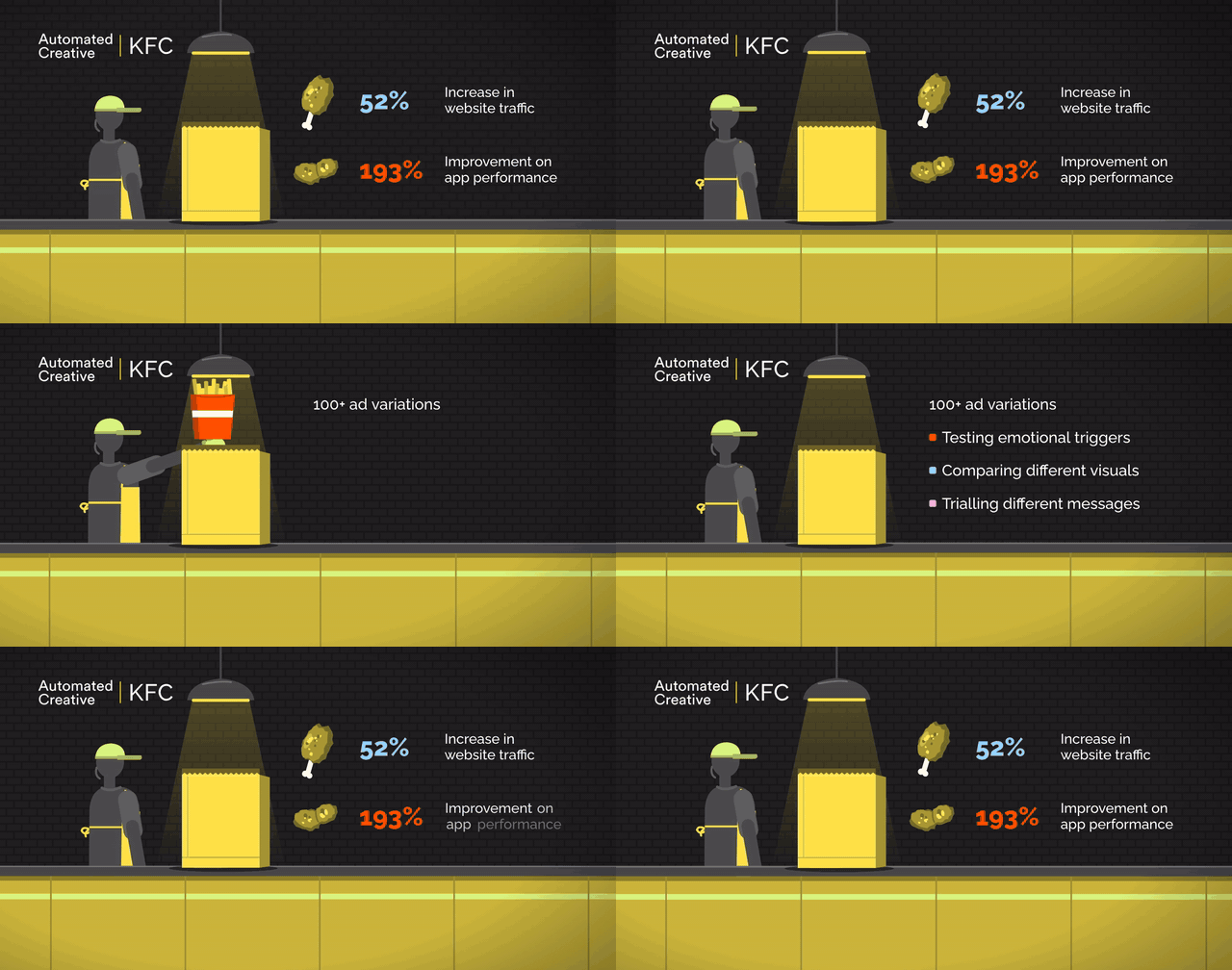
Automated Creatives work with KFC provides an example of this in practice. Combining consumer insights with creative automation, AC developed more than 100 online advertising variations, testing different visuals, messages and app features were tested, with the campaign feedback used to make adjustments.
The results included a 193% improvement on the mobile app performance benchmark. Its Craveable Core campaign was 45% cheaper than KFC’s usual advertising and generated 52.2% more website traffic.
The value wasn't simply producing more adverts but understanding the audience, using that insight to inform creativity and learning from campaign performance
Platforms such as Automated Creative’s Creator use creative AI to streamline creative production while maintaining quality and consistency.
Ultimately, AI should give marketers more opportunities to create effective advertising, not simply more opportunities to fill advertising space.

 Inayah Azim
 25 Nov 2026