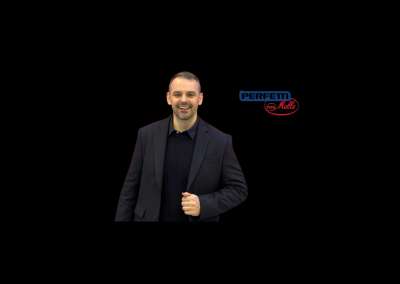
Shiny New Object Podcast - Episode 328
"The biggest currency is attention, and we as marketeers we're fighting for attention, not only from other brands, but from all these other stimuli."
Martin Höfling, Global Marketing Manager Chupa Chups at Perfetti Van Melle - Brasil, shares the importance of a cultural marketing approach to catch consumers' attention on the latest episode of the Shiny New Object podcast.
For his top data driven marketing tip, Martin highlights the need for marketers to interpret data into actionable insights and engage consumers authentically. He also shares his "Miracle Morning" routine and explains cultural marketing strategies he's been using at Perfetti Van Melle, leveraging passion points, cultural moments, and brand truths.
Learn how to earn attention through meaningful brand integrations, in the full episode.
Transcript
The following gives you a good idea of what was said, but it’s not 100% accurate.
Martin Hofling 0:00
The biggest currency is attention, and we as marketeers we're fighting for attention, not only from other brands, but from all these other stimuli.
Speaker 0:08
Are you a fitness loving foodie? Then defy snacks is for you. Defy offers real high quality chocolate you love, combined with functional ingredients, giving you as much as 26 grammes of protein per bag. So you can be both a little bit bad and a little bit good at the same time as a female owned brand, defy dedicates a portion of its profits to other women owned businesses currently sold in the US. You can find us on defy with an i snacks.com and follow us on social at defisnacks.
Tom Ollerton 0:41
Hello and welcome to the shiny new object podcast. My name is Tom Ollerton. I'm the founder of automated creative, the creative effectiveness ad tech platform. And this podcast is about the future of data driven marketing. Every week or so of the pleasure and the privilege of interviewing one of our industry's leaders about their vision for the future of data driven marketing. And this week is no different. I am sat opposite in Amsterdam to Martin Hofling, who is Global Marketing Manager Chupa Chips at Perfetti Van Melle from Brazil. So hi, good to meet you.
Martin Hofling 1:19
Man, super excited to be here. Thanks for the opportunity.
Tom Ollerton 1:21
I love doing this in person, so it's always better. So Martin, for anyone who doesn't know who you are and what you do, could you give the audience a bit of background?
Martin Hofling 1:31
Absolutely, yeah, yeah. So hello, everyone. I'm Martin. I'm 42 years old. I live currently in Amsterdam, where I sit at the global headquarters of Perfetti Van Melle, which is powerhouse of candy brands globally, been working on the company for the past seven years. I started first in Brazil, but then I moved here to Amsterdam four years ago, and then I stood up to the current position about a year ago. Before that, I had some stints in different companies. Most of my time before that, was in Mars, was leading a royal canning brand, yeah. And I spent also a couple of years in the US after I graduated. So yeah, but I'm not going to be going in a lot of details right now. I'm right here, and I have the privilege to look after Chupa Chups brand, this iconic heritage brand.
Tom Ollerton 2:15
Indeed, indeed. So multiple different types of jobs, different countries, different brands. So what new belief or behaviour in the last five years or so has changed your work life for the better?
Martin Hofling 2:31
Absolutely, and that's such an inspiring and profound question. And I thought about ways of sharing a bit of my experience, because so many things changed on the past five years, of course, but there was one thing, which is I kind of adapted to my own way, which is based on the book Miracle Morning. So it's like, you need to follow that strictly, and in my way, I kind of hijacked the main concepts there and I kind of started applying for myself pretty much. There's a few dimensions that he shares that if you do it constantly, can really elevate your life. So what do I do? I try to exercise every day, but before that, I wake up a bit slightly earlier. It's not like you need to wake up at five in the morning, like as early as you can and still keep going. But then you give some time for yourself, for silence. And in my case, I do meditation. So I do mindfulness. Pretty much we're using an app to guide me through it. Then you do a bit of affirmations. So you kind of repeat things that you want to be true about yourself, or that you're working on something like that. Then you mentalize you see yourself in the future. What you would like to be doing, what would you like to accomplish, but you already see yourself doing that thing. Then you exercise. Well, it doesn't need to be as long as going to the gym or running or anything, even if you do a stretch, is already good enough, so minimum 10 minutes that you usually get your body moving. After that, you start you read a little bit. And it's amazing, because in the morning, your mind is so fresh, and you absorb things in a way that you could not expect. So I use that for reading related to learning, so anything related to my field, for instance, and last but not least, I scribble a little bit. So I use they advise you to do it like by writing. I just do on my phone. And it's amazing, because every once in a while, I can go back and see a bit how I'm feeling in different times, and I can tell you Tom this really changed a lot of things. It's hard to believe when you say something like this. People, our natural behaviour is to be a bit sceptical, but I can only advise that people start doing and if I can tell you something, I mean, the whole reason why I'm here, probably discussing this with you today, is because of this exercise, because at some point I was like, I want to share a bit more with people how I feel and what I like and what I'm doing at work. And you know, you found me and so many other people in that journey.
Tom Ollerton 4:40
Well, you oddly, very much, described my own mornings, and not when I'm travelling, when it then I just drink a lot more and don't sleep very well, which is my diet goes to shit, but there you go. But when I'm at home, that is it, yeah, I do 10 minutes yoga, and then I meditate, and then I like work on, like, personal projects, whether that's music or writing or whatever it is. And then. But the vision piece I don't do. I'm not really good at that, so that's a miracle morning, a good way to get started. So give me a bit of advice about how you think people can become a better, data driven marketer.
Martin Hofling 5:12
Absolutely. And I mean the world we're living in. And that's kind of a hook to what our next topic will be when we discuss about the... the main topic of the conversation today is a world where we're constantly bombarded of information and data, right? All of our business are collecting data in ways that is massive and and I think what's what's most important about that is not the raw data itself, but it's how you interpret that data and translate that into actionable insights that you can actually bring meaning. And as marketeers, of course, we need to be obsessed about people and consumers and how we can serve them better. And I think you cannot do that without research and without consumer insights. So therefore that's one of the that's the biggest and most important piece of that that I think any marketer needs to be focused on. And again, I said, I mean, it's how do you navigate complexity and you translate that into simplicity, so people can really well make that actionable. So I would say, be curious about what you're doing. Don't stop on the surface, ask the right questions. Let's say, because the deeper you go, the more insights you will unravel. Let's say, and then really well surround yourself with different points of that and see what the connections that they can help you derive through and those going to bring you the powerful insights that you need to push forward.
Tom Ollerton 6:35
This episode of the shiny new object podcast is brought to you in partnership with Madfest, whether it's live in London or streamed online to the global marketing community, you can always expect a distinctive and daring blend of fast paced content, startup innovation pitches and unconventional entertainment from Madfest events. You'll find me causing trouble on stage, recording live versions of this podcast and sharing a beer with the nicest and most influential people in marketing. Check it out at www.madfestlondon.com.
Tom Ollerton 7:12
So your shiny new object is cultural marketing. I think I know what that is. What do you mean when you say cultural marketing?
Martin Hofling 7:15
Absolutely. So that's something that is becoming increasingly more important, and is again, really related to what we are experiencing as society and also as marketeers, which is, how do you insert your brand in a way that is meaningful for people's lives, and how you add value rather than interrupting people? So this is coming from the moment where we all know, like how much exposure to speed of information we are getting on a single day. So that can be advertising, of course, when we go to our phones, but that can also be the WhatsApp, and it can also be your family or TV. What's happening is that the amount of information and the speed of information that we are having, it's really creating some sort of a cognitive impairment in us, and we are, as a consequence, are more and more choosing what we pay attention to. So in these days, let's say the biggest currency is attention, and we, as marketeers, we're fighting for attention, not only from other brands, but from all these other stimuli. So the thing is, how do you find a way to talk to an audience, insert the brand in their lives, in something that they already see meaning. So when they see you, they don't see you as advertising, but they see as a partner, as someone that is adding, that is exchanging. Because another consequence, of course, of this crazy world we're living in is that people are craving for authenticity. They're craving not only to relate to brands that are one transaction and just, you know, imposing, but they also want to, you know, have an exchange, have a conversation. So how do you do that? And of course, social media is a great platform for you to do it. So when I talk about cultural marketing, is exactly about tapping into the spaces where your audience is most active and already engaged. So for instance, let's talk about passion points, or cultural passion points, so that can be gaming for a certain audience, or it can be football or any other sports for another audience. So how do you make sure that more and more, instead of doing the traditional marketing where you're just going to have a hero 30-second video, you just really do drops, and you communicate around those passion points, because then your audience is going to really be open to you, and they're really going to be understanding what you stand for through those moments. This is the first dimension. There are some others. Other dimension is cultural moments, of course. So those are moments that naturally already drive attention. Everyone is looking to those things. The eyeballs are already there. So how do you make sure that you also participated on that? So that can be, of course, one of the most famous so Super Bowl, but there can also be other moments, such as Halloween, depending on your category, or smaller things like a new album from Taylor Swift. So how do you make sure that you hijack those moments? Because then consumers are already open to that conversation. That is not one transaction. But it's more a third dimension I really like about it is cultural truths of your brand. So that is how your brands are already perceived by consumers, how they relate to your brand, and they're giving signals on social media all the time about it. So I love some examples. For instance, if you see the one of the latest campaigns that got prizes now from Vaseline. It was about Vaseline verified. So it's all the crazy ways that people were already talking about Vaseline online, and then they come, hijack the moment, create a certification and really build conversation with those communities.
Martin Hofling 10:34
Can you explain that campaign to someone who might not have seen it?
Martin Hofling 10:38
Yeah, and it's an amazing campaign. I can't recall exactly what was the prize that they got. But it's extremely interesting. So you see that across social media, overall, people are using Vaseline for different ways that are crazy, sometimes not exactly what the product was supposed to be. So some people use it, for instance, for like, I don't know when they're painting their nails, or they're using it for more exquisite ways, let's say. But then Vaseline had a concern, because some of those ways are not necessarily safe, so they wanted, really, to make sure that whatever people were doing, it was something that was not detrimental, but also, yeah, good for other people to know. And by tapping into those moments, they could also elevate new occasions for consumption for the brand. So how they did it. They went across, they checked all the crazy ways that people were doing it, they tested it themselves, and then they gave a verification for the creators and influencers that were making the best use of it. And that went completely nuts and viral across social media, because everyone wanted to jump into that and said, Yeah, I do that. That's very relatable. I use that in that way. So this is a great example of, let's say, jumping and inserting your brand into culture in a cultural truth, or ways that people already behave with and relate with your brand. And the fourth dimension about culture is about cultural drops, which is also very important, and is linked, of course, to scarcity. And linked, of course, with the with the what people expect from brands, and when two brands, for instance, can come together in disruptive ways, in different ways, and the power that it has in terms of sparking conversation. So I'm going to give it an example next. But before that, I want to talk a little bit about neuroscience and why culture and fame is so important. Because we know as marketeers, of course, the biggest ambition and role that we have is build and refresh memory structures. And how does the brain work? When something is really off, when something is really strange, it strikes us as danger, and we have grown and evolved with this experience. But when something is familiar but unfamiliar, then that's when our brain is really lit up, because that's not fear, that's curiosity, and that's learning. So that's really when things start going crazy. And so what is, what is exactly culture is when you present your brand in a way that is familiar but unfamiliar on the same time, and that way, you create that conversation, you create that relatability, you create that experience that then really sticks into people's brains and minds. So, yeah. So that's why I became increasingly obsessed. And in case of Chupa Chups, for instance, we have, right now, a drop with Stranger Things. And it was a very happy one.
Martin Hofling 10:41
We have them in the office.
Martin Hofling 11:27
Exactly.
Tom Ollerton 11:27
So we have, we have loads of your stuff in the in the office at the minute, and I'll tell you why after but yes, well, I've seen it. It's beautiful. Tell me about that partnership, exactly.
Martin Hofling 13:18
So we were super excited about that opportunity that we were cooking for quite some time. And you think about these two brands, I mean, they have so much in common because, of course, well, brand Stranger Things is a phenomenon, let's say, is one of the biggest, most impactful shows of Netflix of all times, they have a massive engaged fandom that people really talk about it, and right now they have their season finale. So of course, it's like the fabulous opportunity on a timely manner. So it's really it was something that we were looking into partner with another brand where we could borrow their fame from and really spark that relatability. And it's been like a long journey. So we have many products that we're dropping like we have limited flavours, limited packs, and we're milking this as much as we can in social media and also with creators. And the initial repercussion has been just crazy, because people, when they see Stranger Things, they have such a passion towards it. And the way that we looked into inserting ourselves into it was also very organic. Because, of course, that's one thing about authenticity, right? When you try to force your brand into something that can really backfire. But then how we did it, we created certain scenes. We really replicated some of the main environments of the of the TV show, and we inserted the brand there like it was always there. So it's hard to tell you, so I invite you to take a look on our Tiktok channels across our markets, in Europe or live right now, the campaign is live across 34 markets, so it is our most successful campaign of all time, let's say and well, it's really about tapping into culture, and it's really about delivering meaning more than interrupting. So it's about earning attention rather than buying in it. And that's why I'm so obsessed about culture right now.
Tom Ollerton 15:18
So one thing we're bit confused on you said at the end there, it's about earning, not buying. I'm presuming money changed hands with the Netflix Corporation.
Martin Hofling 15:27
Of course, of course. I mean, what we're talking about is, of course, paid media will be part of your strategy, because you can leverage and you can further amplify your message. But the point is, you're not buying it from the sense, traditional sense of just serving an ad, but you're really inserting yourself in a conversation, and that stops being something that is one direction, so it's something that people can also come back to you. So it's just more about, let's say, earning attention in the sense that is not only paid because another thing that just meant and thanks for your question, because that really closes, let's say why culture matters so much is that this is tapping into such a primary point, and so emotional point for so much, much people, that also media gives a lot of tension for any of those drops, which happens, that you can really spark earned media when you do those, because also traditional vehicles will really give the right space for it. So it's also for smaller brands like ourselves, or for brands that are really challenger brands, when you really tap into those that cost money, as you said, you can really amplify your reach, because then people will talk about it naturally. So it's about maximising also effectiveness of your creative.
Tom Ollerton 16:40
Well, unfortunately, we are at the end of the podcast, and I would love to carry on talking about that, that campaign, and you've talked with real passion and conviction, you know what? All these them, like the where, where the audience is having the right cultural moments and creative ideas, or reacting to the way people are talking for like the fascinating example, then cultural drops, and looking at the neuroscience and all of this excitement and ideas are all built around your understanding and belief and building and refreshing these memory structures, right? You know, so it's there's so much I want to ask you, but we have to finish. So Martin, if someone wants to get in touch with you. Where can they get in touch with you? And what makes a message that you will actually respond to?
Martin Hofling 17:20
That's great. Well, I mean, try not to use AI if you can, because we're starting to grasp what it is. So when it comes I'm active on LinkedIn, so it's easy to find me there. And I really love to connect with people and bounce ideas. So, you know, just share to me what, what would you like to talk about and how I can help. And I'm happy to do it.
Tom Ollerton 17:38
Yeah, because, I mean, I think people of brands always think that they're the only people that they're the only people that get messages on LinkedIn. I am inundated with messages from LinkedIn, and this guy wrote to me the other day, and it was clearly wasn't AI, and I wrote back to him. I said, Look, I'm really not interested in your product, but thank you so much for just writing me a message.
Martin Hofling 17:53
It was and I exactly last week, honestly, I was participating on an event, and I had one ticket that I wanted to give out, so I went through my LinkedIn, and I said, Hey, if someone wants to attend these events, just send me a DM. And then I got a lot of messages, and my criteria was the ones that I read and I knew or I felt they were not written by AI, yeah, among other criteria. So I love AI, by the way, I'm a super fan, but I think it needs to be used consciously.
Tom Ollerton 18:19
Let's say consciously, yeah, that is, that's the word. Thanks so much for your time.
Martin Hofling 18:23
Thank you so much.
What Next?
Subscribe to our YouTube channel
Listen to our ‘Shiny New Object’ Podcast on Apple Podcasts, Spotify and Soundcloud.
Want to stay updated with the latest industry news?
Subscribe to our newsletter and we will keep you posted.
Taking the Me Out of Media - with SharkNinja's Nick Cedar
13.11.2025Audience-centric data storytelling that drives to real insights for brand growth.
Lines AI Can't Write with Secret Escapes' Pete Durant
16.10.2025AI is only as good as the prompt you put in.
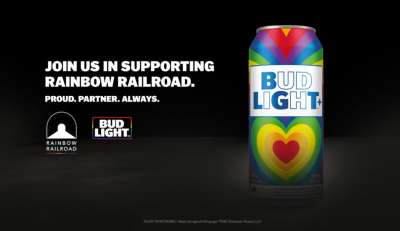
Pride and LGBTQ+ Ads Reviewed
06.07.2020Pride and LGBTQ+ Advertising is the subject of this week's Advertisers Watching Ads. Watch marketing leaders debate existing ads and give their tips to make them better.